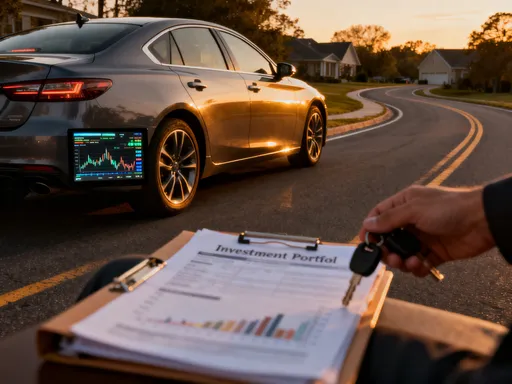
How I Finally Saved Up for a Car — Real Financial Methods That Actually Work
Saving for a car felt impossible at first — I kept overspending and losing track. But after testing different financial methods, I found a clear path. It wasn’t about earning more; it was about smarter planning. This is the exact approach I used to build my car fund without stress. If you're stuck, these practical strategies can help you get there too — no hype, just real results. The journey taught me more than how to afford a vehicle; it reshaped my entire relationship with money. What began as a simple goal became a powerful lesson in discipline, patience, and intentionality. And the best part? These methods aren’t reserved for high earners or financial experts. They work for anyone willing to make consistent, thoughtful choices.
The Car Purchase Dilemma: Why Saving Feels So Hard
For many, the dream of buying a car ends not because of low income, but because of invisible financial habits that quietly sabotage progress. It’s easy to assume that saving fails due to lack of money, but the real issue often lies in how money is managed — or mismanaged — on a daily basis. Common patterns like inconsistent budgeting, impulse spending, and failure to plan for hidden costs create a cycle of false starts and frustration. A person might set a goal to save $8,000 for a used car, only to find their balance stuck at $1,200 after six months. The disappointment isn’t just financial; it’s emotional. Each setback chips away at motivation, reinforcing the belief that saving is pointless or out of reach.
One of the biggest obstacles is lifestyle inflation — the tendency to spend more as income increases. Even small raises or bonuses often go toward comfort upgrades: better coffee, faster internet, or newer clothes — expenses that feel justified but drain savings potential. At the same time, short-term thinking dominates financial decisions. The brain is wired to prioritize immediate rewards over future benefits, which makes skipping a night out to save money feel like a sacrifice without a clear payoff. Without a strong emotional connection to the goal, it’s easy to abandon it when temptation arises. This is why many people restart their car fund multiple times, only to lose momentum when an unexpected bill appears or a sale tempts them to spend.
Another major challenge is the lack of a structured plan. Many people save “when they can,” treating their car fund like an afterthought rather than a priority. Without a clear system, money flows into the account inconsistently, if at all. Emotional spending — buying comfort items during stressful times — further undermines progress. The solution isn’t willpower alone; it’s designing a financial environment that supports consistency. By understanding these behavioral traps, individuals can stop blaming themselves and start building systems that work with human nature, not against it. Recognizing that failure is often a systems issue, not a personal flaw, is the first step toward lasting change.
Building a Realistic Fund: Defining Your Financial Target
Before a single dollar is saved, a clear and realistic target must be set. This is not just about picking a car and noting its price — it’s about calculating the full financial picture. The sticker price is only one piece of the puzzle. Buyers must also account for sales tax, registration fees, insurance premiums, and potentially a down payment if financing is involved. For example, a $15,000 used car might require an additional $1,500 in taxes and fees, plus $600 for the first year of insurance. Ignoring these costs leads to underestimating the total needed, setting the saver up for a painful shortfall when the time comes to buy.
A well-defined savings goal includes both a number and a timeline. Instead of saying “I want to save for a car someday,” a better approach is: “I will save $18,000 in 24 months for a reliable used vehicle.” This specificity creates accountability and makes progress measurable. It also allows for reverse engineering — breaking the total into monthly or weekly deposits. In this case, $18,000 over two years equals $750 per month, or about $173 per week. Seeing the required contribution in weekly terms often feels more manageable than facing the total sum all at once.
Flexibility is also important. Life changes, and so can the goal. If market conditions shift or personal needs evolve, adjusting the target vehicle or timeline is acceptable — as long as the commitment to saving remains. Some may choose a more affordable model to shorten the timeline, while others might extend their plan to include a newer or safer car. The key is to remain intentional. A clear target also helps resist temptation. When faced with an impulse purchase, the saver can ask: “Is this worth delaying my car by three weeks?” This mental framing turns abstract savings into a tangible trade-off, reinforcing discipline.
Planning for both new and used vehicles is wise, even if the preference is clear. Used cars offer lower upfront costs and slower depreciation, but may come with higher maintenance risks. New cars have warranties and predictable performance but lose value quickly. Evaluating both options helps build a realistic understanding of affordability. The goal isn’t perfection — it’s preparation. A well-researched, detailed target transforms a distant dream into a practical, actionable plan.
The Power of Automated Savings: Letting Discipline Work for You
One of the most effective tools in personal finance is also one of the simplest: automation. Relying on willpower to save money is a recipe for inconsistency. Human behavior is influenced by mood, stress, and temptation, all of which can derail even the best intentions. But when savings are automated, they become independent of emotion. Setting up a direct transfer from a checking account to a dedicated savings account ensures that money is saved before it can be spent. This “pay yourself first” approach treats savings like a non-negotiable bill, giving it the same priority as rent or utilities.
Choosing the right account is crucial. A high-yield savings account offers better interest than a standard one, helping money grow with minimal effort. More importantly, the account should be difficult to access impulsively. Avoid linking it to a debit card or using it for everyday spending. The goal is to create friction for withdrawals, not convenience. Some people even open an account at a different bank to add an extra layer of delay. This design leverages behavioral psychology — making the right choice easy and the wrong one harder.
Timing the transfer to coincide with payday increases success. When money arrives in the checking account, the automated system immediately routes a portion to savings. This prevents the common trap of spending first and saving what’s left — which often means nothing is saved at all. For someone paid biweekly, setting up a $175 transfer every two weeks aligns perfectly with the earlier $18,000 goal. Over time, these small, consistent actions compound. After one year, $4,550 is saved. After two years, the full amount is reached — all with minimal active effort.
Automation also builds confidence. Watching the balance grow steadily reinforces the belief that progress is possible. It turns saving from a chore into a quiet victory. If life circumstances change — such as a temporary income drop — the system can be adjusted. The key is maintaining the habit, even if the amount is reduced temporarily. The discipline of consistency matters more than the size of each deposit. Over time, automated savings become invisible, yet powerful — a silent engine driving financial progress.
Cutting Costs Without Sacrifice: Smart Adjustments That Add Up
Reducing expenses doesn’t require drastic lifestyle changes. The most effective cost-cutting strategies are those that go unnoticed — small, painless adjustments that free up cash without creating a sense of deprivation. The goal isn’t to live with less, but to spend on what truly matters. Many budgets contain “invisible” expenses — recurring charges that drain money without delivering proportional value. Subscription services are a prime example. A person might pay for multiple streaming platforms, a meal kit, a fitness app, and a cloud storage plan, totaling $100 or more per month. Reviewing each one and canceling those rarely used can reclaim hundreds annually.
Grocery spending is another area where smart choices yield big savings. Simple habits like planning meals, using shopping lists, buying store brands, and avoiding shopping while hungry can reduce weekly bills by 20% or more. These changes don’t mean eating poorly — they mean eating wisely. Similarly, reviewing insurance policies can uncover savings. Comparing auto, home, and health insurance rates annually often reveals better deals. Refinancing high-interest debts, even small ones like credit card balances or personal loans, can free up monthly cash flow. Lower interest means more money stays in the pocket instead of going to lenders.
Utility bills also offer opportunities. Switching to energy-efficient lighting, adjusting thermostats slightly, and unplugging unused devices reduce electricity costs over time. Some utility companies offer budget billing or discounts for paperless statements and automatic payments. These small wins add up. Saving $50 per month in various categories equals $600 per year — enough to shorten the car savings timeline by nearly a month. The key is awareness. Without tracking spending, these leaks remain hidden. A simple monthly review of bank statements helps identify them.
Redirecting these savings to the car fund is essential. It’s not enough to cut expenses — the freed-up money must have a purpose. Otherwise, it gets absorbed into other spending. By assigning every dollar a job, including those saved from cost reductions, the car goal moves forward faster. This approach builds financial awareness and control, turning passive spending into active progress.
Boosting Income Strategically: Side Gigs That Fit Your Life
While cutting costs helps, increasing income can dramatically accelerate savings. For many, the idea of a side gig feels overwhelming — another demand on limited time and energy. But the most effective income-boosting strategies are those that align with existing skills, interests, and schedules. The goal isn’t to burn out, but to generate extra cash in a sustainable way. Freelance work is a strong option for those with marketable skills. Writing, editing, graphic design, virtual assistance, or bookkeeping can be done remotely, often in flexible hours. Platforms exist to connect freelancers with clients, though building direct relationships often yields better pay and stability.
Selling unused items is another low-effort way to boost funds. Homes are full of clutter — old electronics, clothing, furniture, toys — that can be turned into cash. Online marketplaces make it easy to list items locally or nationally. A weekend spent decluttering can generate hundreds of dollars with minimal time investment. The added benefit is a cleaner, more organized living space. For parents, gently used children’s items often sell well, especially high-quality brands.
Other options include seasonal work, such as holiday retail, tax preparation, or tutoring. These roles fit into specific times of the year and don’t require long-term commitment. Some people rent out a spare room or parking space, though this requires comfort with sharing space. The key is to choose opportunities that don’t disrupt family life or primary work. Every extra dollar earned should go directly into the car fund. Mixing side income with regular spending blurs the purpose and slows progress.
Consistency matters more than scale. Earning an extra $200 per month — whether from freelance work, sales, or part-time hours — adds $2,400 annually. That’s over a year’s worth of progress on the $18,000 goal. The mindset shift is crucial: instead of seeing side income as “extra money to spend,” it becomes “targeted fuel for the goal.” This transforms how money is viewed and used, reinforcing discipline and purpose.
Managing Risk: Protecting Your Progress from Setbacks
No savings plan is complete without risk management. Even the most disciplined saver can be derailed by unexpected events — a medical bill, home repair, or job loss. These setbacks don’t mean failure; they test the resilience of the plan. The key is not to avoid risk entirely — that’s impossible — but to prepare for it. One of the best ways is to maintain a small emergency buffer alongside the car fund. This doesn’t mean saving for two goals at once, but rather setting aside a modest amount — say, $1,000 — to handle true emergencies without touching the car savings.
Without this buffer, any surprise expense forces a choice: go into debt or dip into the car fund. Both options disrupt progress. Using car savings for emergencies means restarting the clock, which can be demoralizing. Going into debt creates interest payments that drain future income. A small emergency fund acts as a financial shock absorber, allowing the saver to stay on track. It doesn’t need to cover every possible crisis — just the most likely ones.
Another risk is taking on new debt during the saving period. Financing a vacation, buying furniture on credit, or using a credit card for daily expenses can quickly erode progress. High-interest debt grows faster than savings, creating a losing race. The solution is to pause non-essential borrowing. If credit is used, it should be paid off in full each month. This requires discipline, but protects the integrity of the savings goal.
Timing the purchase wisely also reduces risk. Avoid buying a car during periods of financial uncertainty, such as a job transition or family change. Waiting for stability ensures the purchase doesn’t become a burden. Similarly, avoid stretching affordability to the limit. Choosing a car that fits comfortably within the budget — not one that requires every dollar — leaves room for insurance, maintenance, and fuel. A financially sound purchase supports long-term stability, not stress.
The Final Stretch: Making the Purchase with Confidence
Reaching the savings goal is a major achievement, but the final step — the purchase — requires careful attention. Many people, excited to finally buy, make emotional decisions that undermine their hard work. The key is to stay disciplined until the transaction is complete. If paying in cash, the process is straightforward: transfer funds, inspect the vehicle, and finalize paperwork. But if financing is needed, even partially, understanding the terms is critical. Interest rates, loan length, and monthly payments must align with the budget. A longer loan may lower monthly costs, but increases total interest paid and extends financial exposure.
Negotiating the price is another area where preparation pays off. Researching the fair market value of the vehicle — using trusted pricing guides and recent sales data — gives the buyer confidence. Starting the negotiation below the target price leaves room for compromise. Being willing to walk away ensures the final price is fair. Dealerships often have incentives, rebates, or end-of-month sales that can reduce costs. A cash offer, even if partially funded, can strengthen bargaining power.
Avoiding common pitfalls is essential. Extended warranties, add-on features, and unnecessary upgrades are profit centers for sellers, not value for buyers. These extras can add thousands to the cost without improving safety or reliability. Sticking to the original budget protects the buyer from pressure tactics. The focus should remain on long-term value — reliability, fuel efficiency, and low maintenance — not short-term appeal like color or sound systems.
Finalizing the purchase includes securing insurance, registering the vehicle, and scheduling a maintenance check. These steps ensure the car is not just owned, but protected and ready for use. The moment of ownership should feel like a victory — not just of acquisition, but of financial wisdom. Every choice made along the way contributed to this outcome.
From Goal to Ownership — A Smarter Financial Mindset
Owning a car without financial stress isn’t the result of luck or a sudden windfall — it’s the outcome of consistent, thoughtful decisions. The journey to saving $18,000 taught more than how to afford a vehicle; it built lasting financial skills. Budgeting became a tool, not a restriction. Saving turned from a chore into a habit. Every small choice — skipping a subscription, selling an old laptop, automating a transfer — added up to a major achievement. More importantly, it proved that financial goals are within reach, even on a modest income.
The methods used for the car fund are not isolated tricks — they form a repeatable system. The same principles apply to saving for home repairs, medical expenses, or future vacations. Automation, cost awareness, income optimization, and risk management are universal tools. They transform temporary effort into permanent confidence. The real reward isn’t just the car; it’s the peace of mind that comes from knowing you can achieve what you set out to do.
Financial progress isn’t about perfection. There will be months when expenses run high or motivation dips. The difference is having a system that keeps moving forward, even slowly. By focusing on behavior, not just numbers, the journey becomes sustainable. And when the keys are finally in hand, they represent more than transportation — they symbolize control, resilience, and the power of a well-managed plan. That’s a victory worth driving toward.